desire lines
Form and sensation
2026
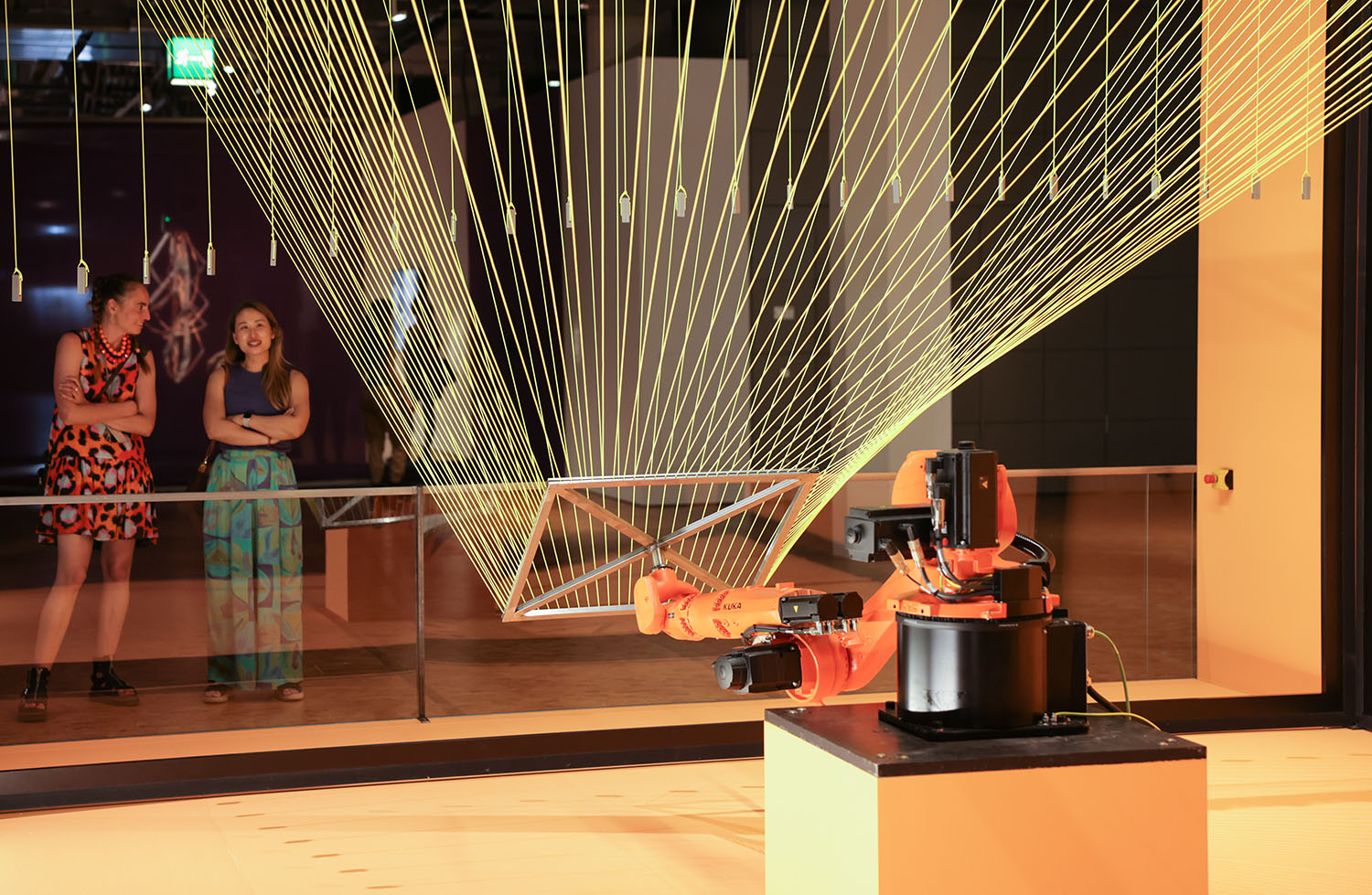
The relationship between machines and emotion is not immediately apparent. An industrial robot is the product of rational engineering designed for efficient production. And yet, the machine contains a source of sensuality that “desire lines” explores.
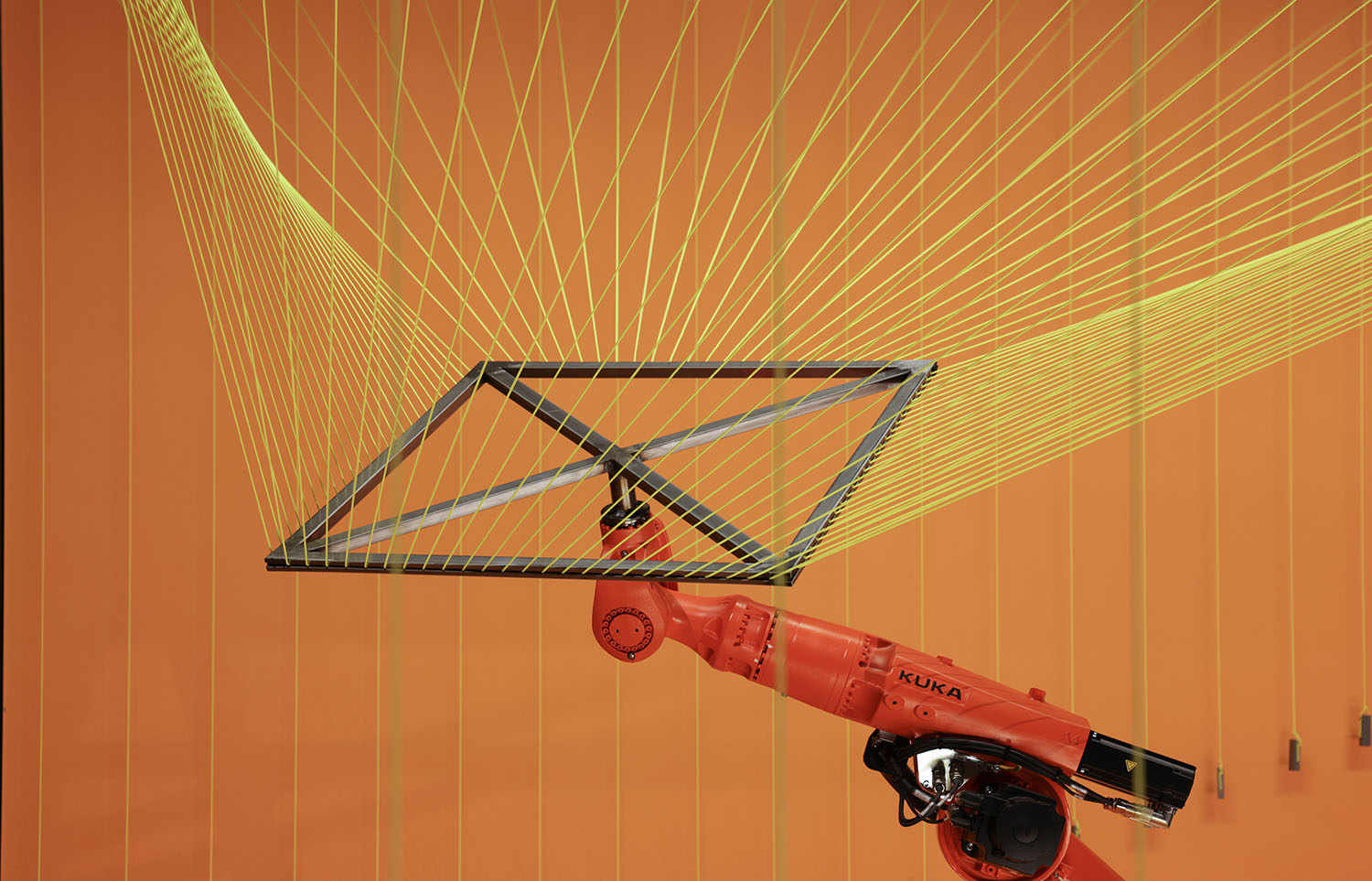
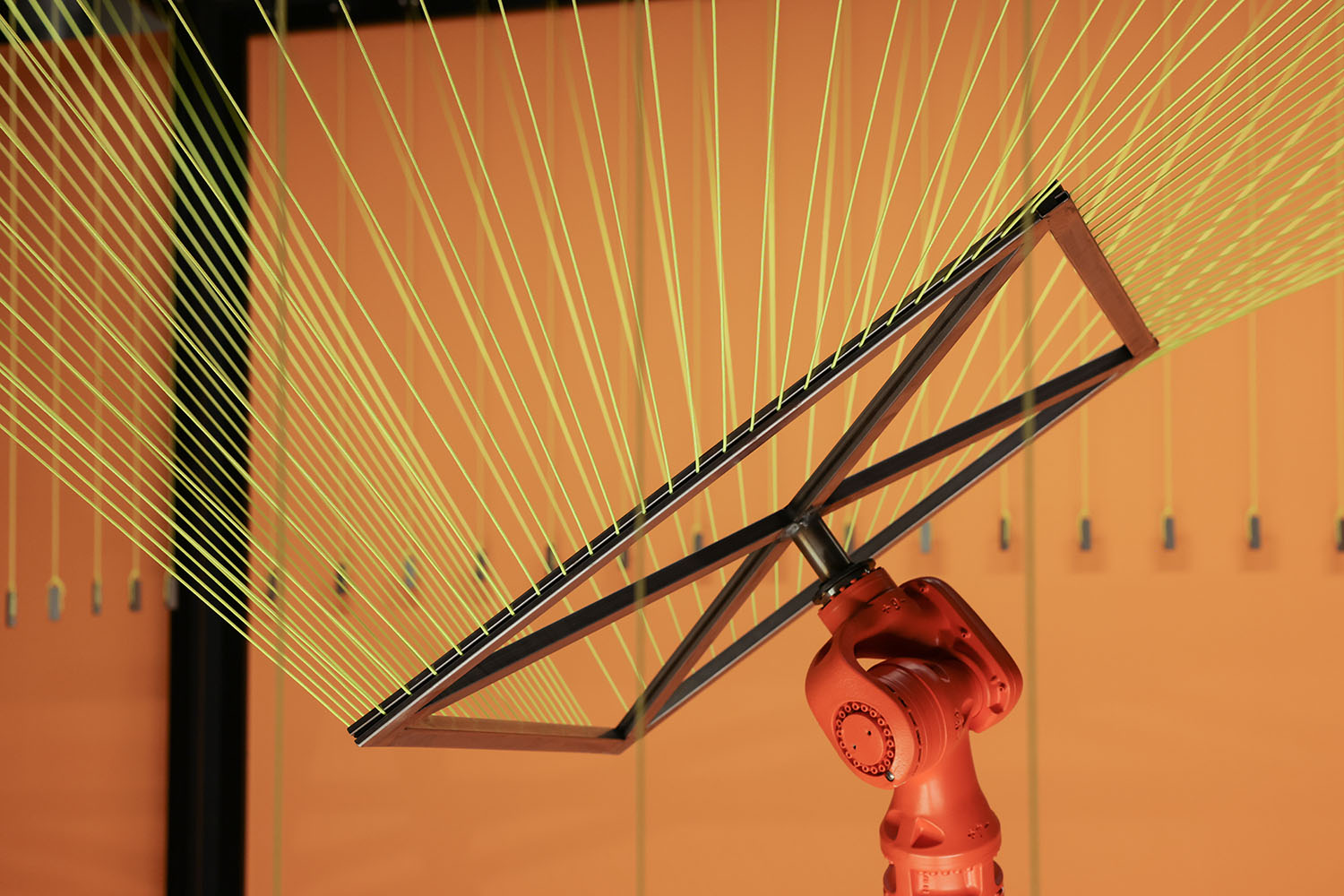
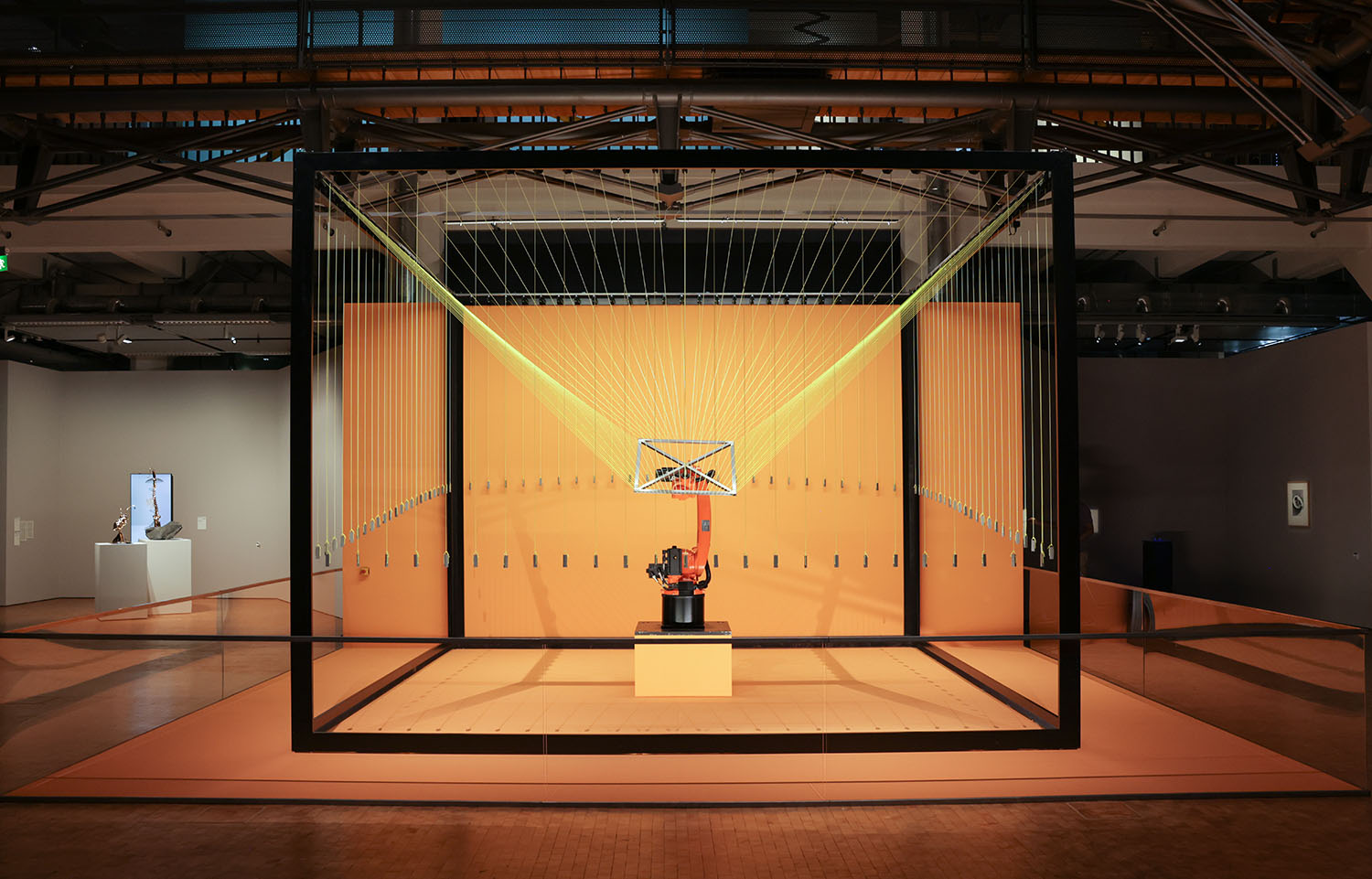
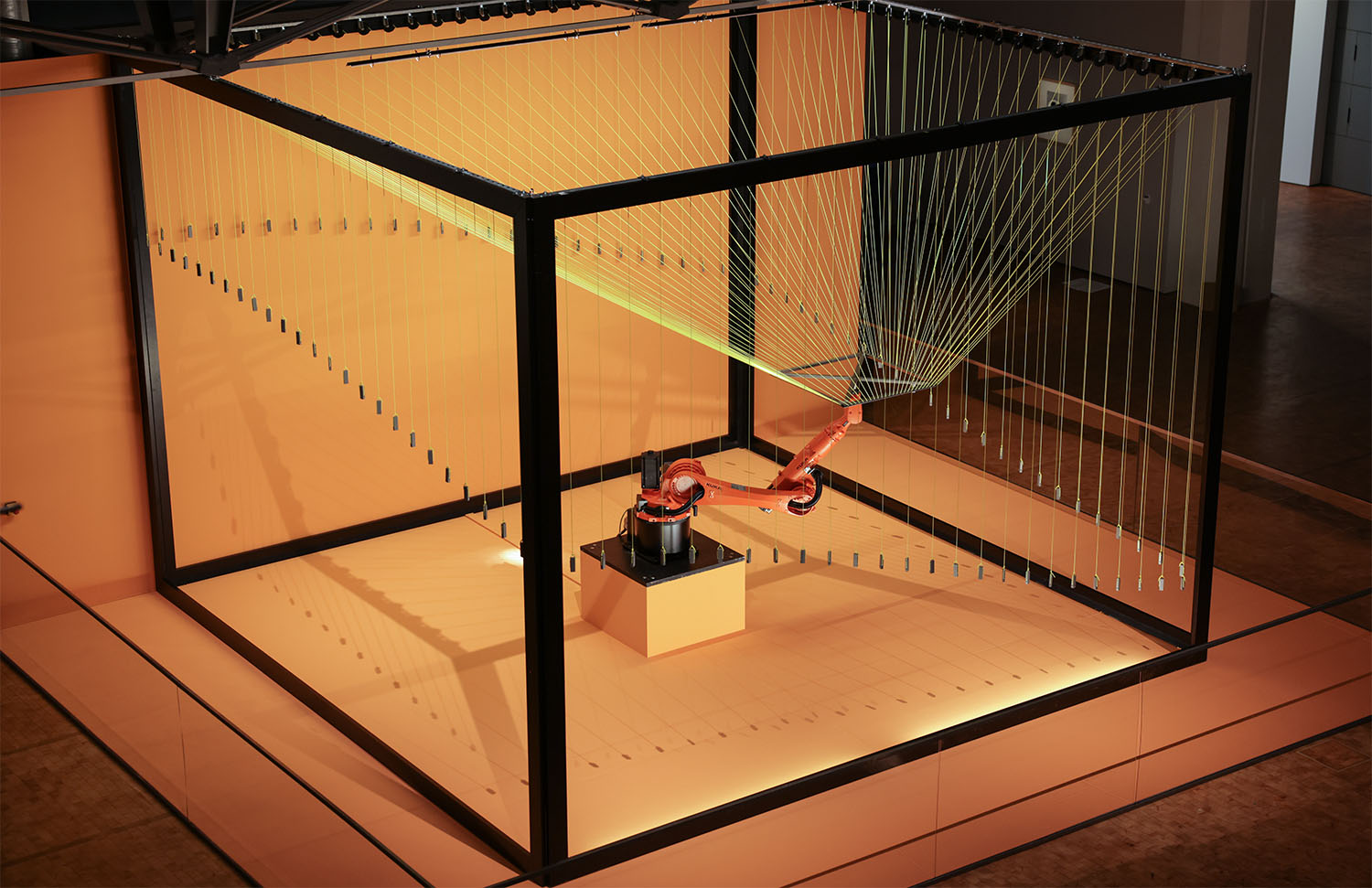
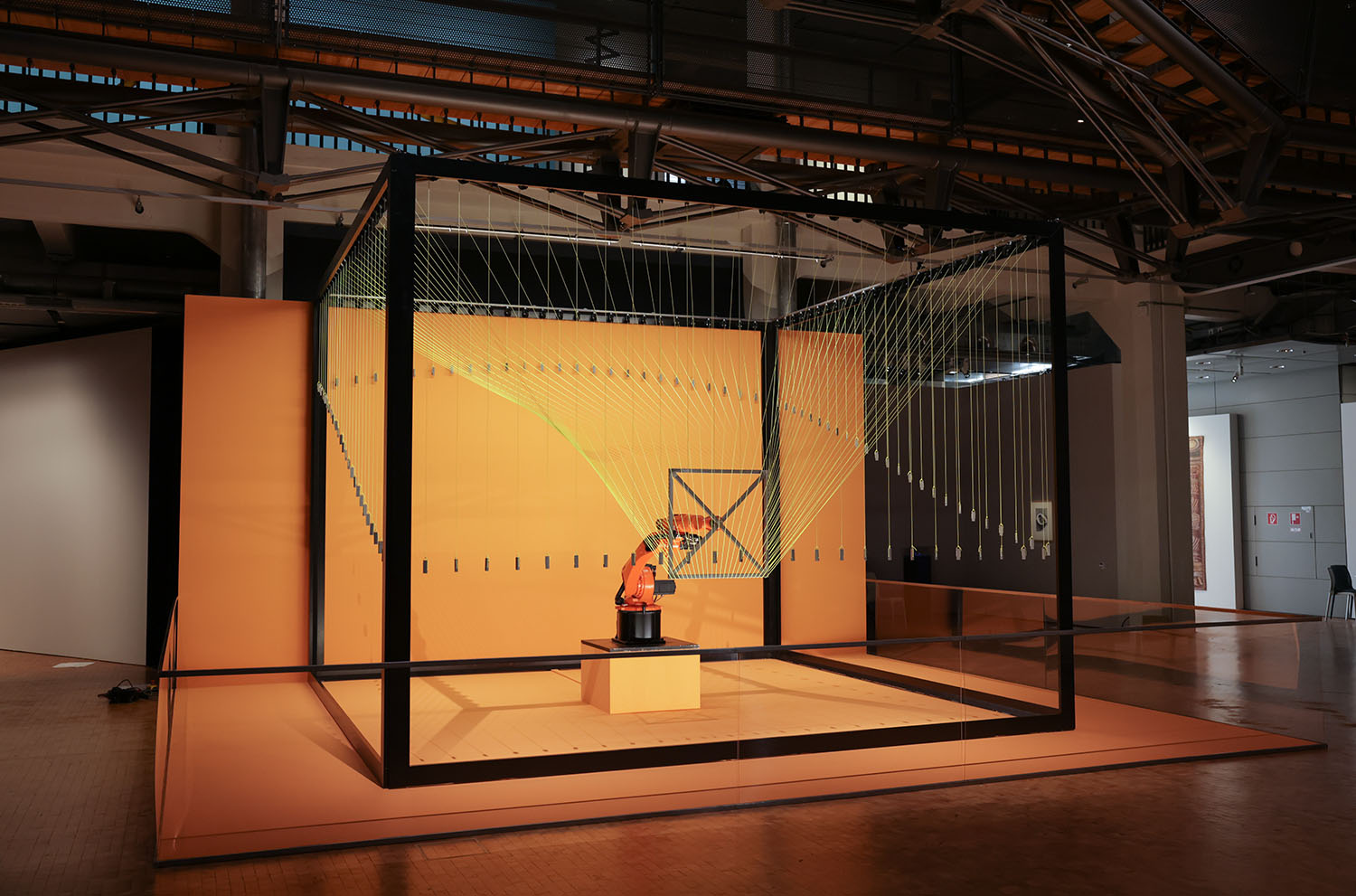
In “desire lines”, the robot, functioning as a manipulator, stands at the center of a minimalist cubic space. From a square frame in its hand, 100 ropes run diagonally upward. Via pulleys arranged at regular intervals along the upper edges of the cube, the ropes are guided downward along the outer sides, where they are tensioned by weights. Thus, the ropes form a transparent curtain on the outside and, on the inside, a conical shape converging toward the robot. Through its slow movement, the robot arm alters the spatial configuration of the ropes, thereby continuously manipulating the space. The internal dynamics of the ropes are reflected externally in a different way through the positions of the weights.
The result is a complex, intangible interplay of geometry, balance, and constantly shifting form, characterized by the sensual aesthetics of fluid spatial transformation. This dreamlike interplay of movement captures the viewer’s attention and entices them to let themselves drift.
Yet the work’s title, “desire lines” (lines of longing, paths of desire), also provides a sense of grounding. The term originally comes from urban and transportation planning and is now also used in software development. “Desire lines” refer to the informal paths that emerge when people leave established routes and choose their own paths through a landscape.
Consulting concept and design: Anett Holzheid